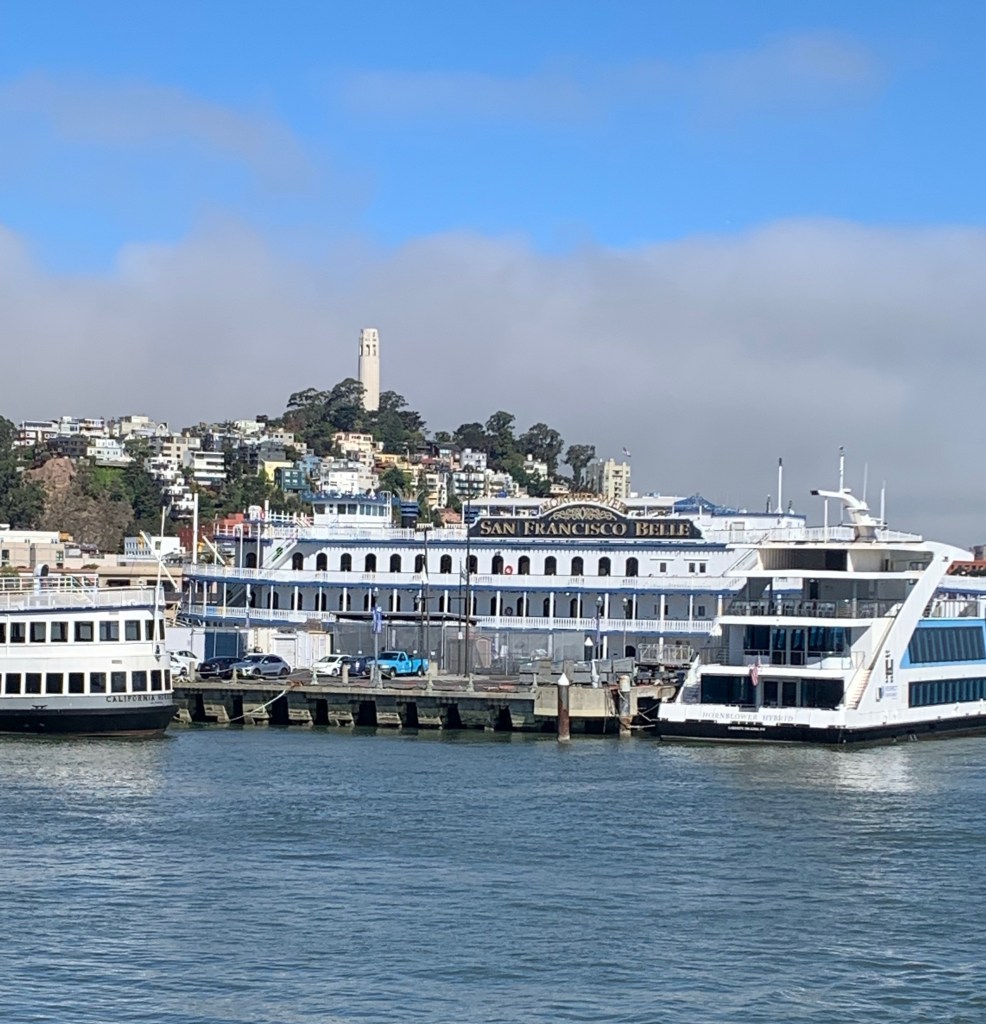
We took the ferry to Angel Island, a detainment site for folks immigrating into San Francisco. This site was almost abandoned to instead focus on parks and recreation, but the mark made my the people detained there turned it into a historic landmark.
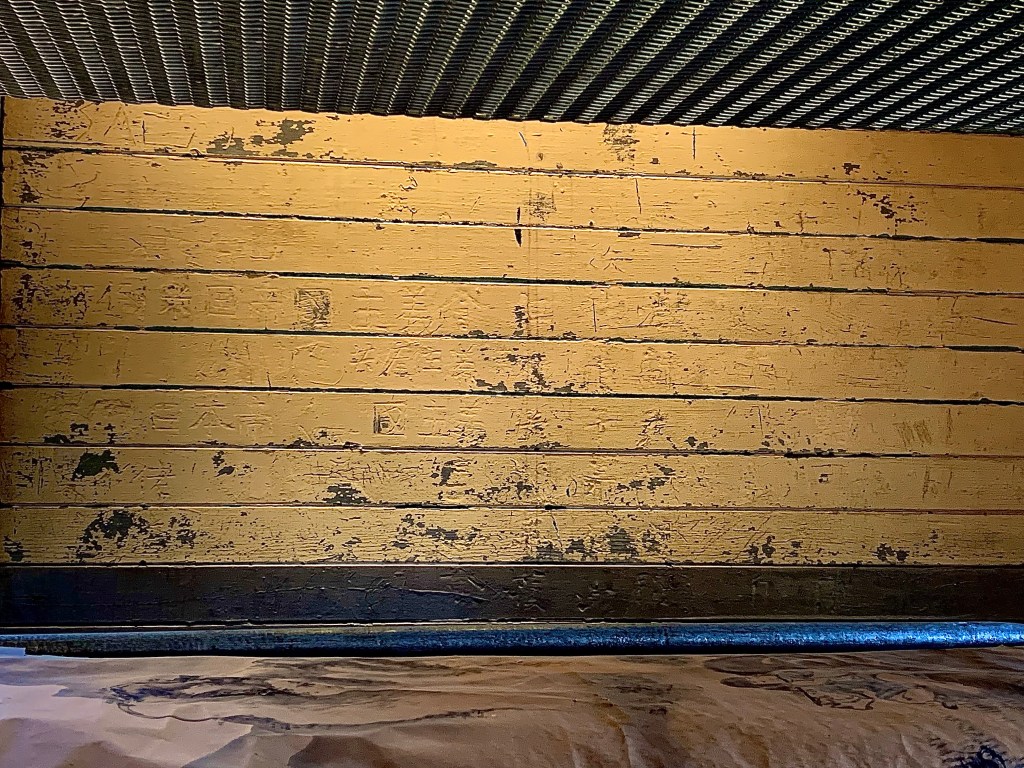
Shown here, the graffiti left by people who were kept in the barracks are well worth preserving. Since we have immigration records from the time, there’s a lot of contextual information on who composed each piece. As we toured, we learned the individual fates of the different writers, and their connections with people today. It was striking to hear about the children of detainees that now volunteer on the site, sharing their parents stories.
These individual, personal connections in turn connect the visitor with the past.
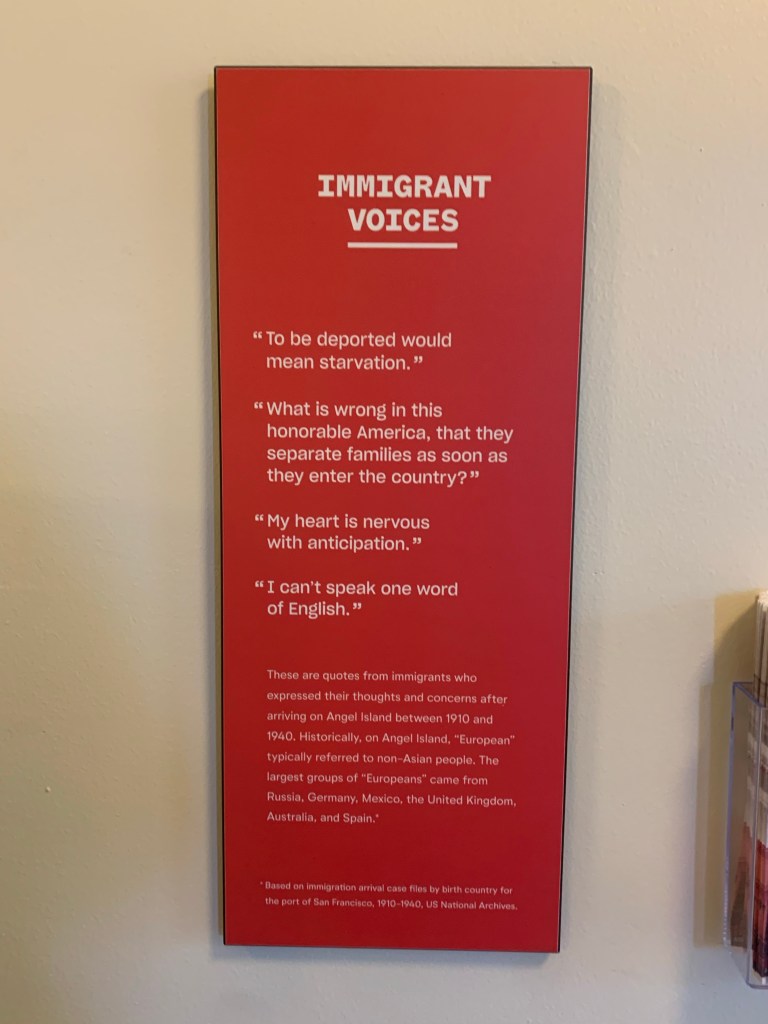
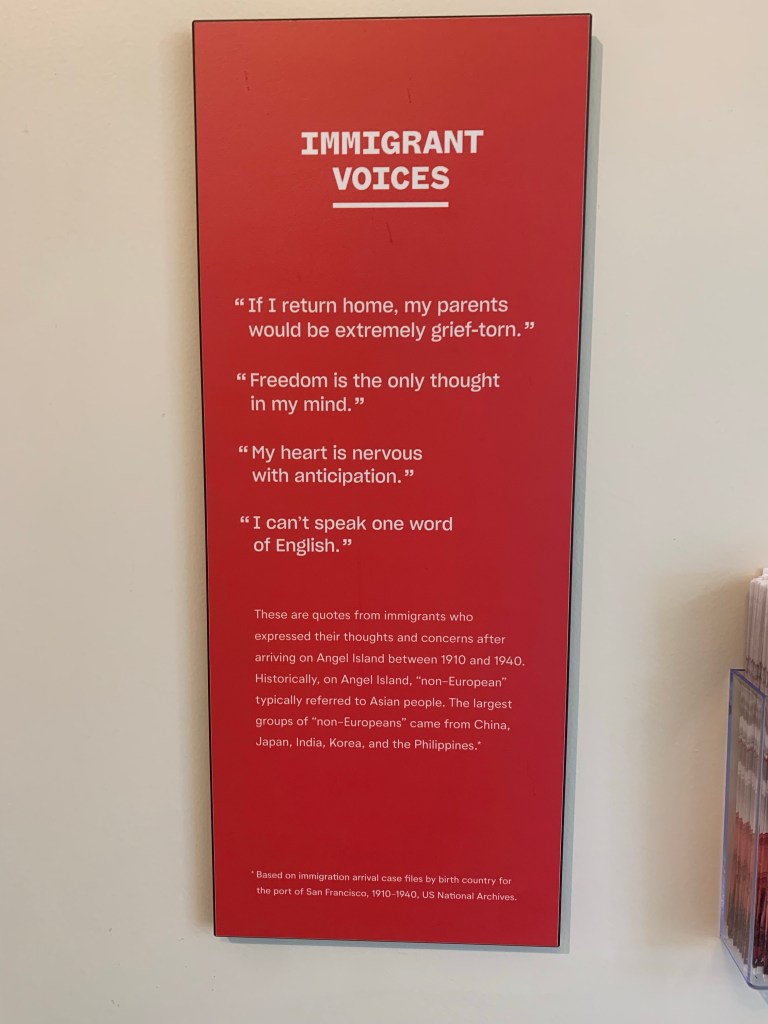
These two labels are both from the accompanying museum, housed in the old hospital on the site. They restored two entrances, once which was reserved for ‘European’ people, the other for ‘non-European.’ By entering through one or the other, you get a slightly different introduction to the space. I’d like to discuss these quote choices in more depth when we meet for class today.
I did notice that some of the signage in the hospital’s museum said things like ‘on the site’ or ‘at the hospital on Angel Island.’ I was confused that they didn’t simply say ‘here.’ Perhaps the exhibit was designed to be mobile if necessary, but I thought that slight change in language took away some of the oomph in a site-based museum.
The intimate connections and stories showcased at this site are what I will take with me. The wealth of data here is a huge factor, and shows how effective that type of storytelling is. It’s incredibly heavy content, but individual stories with immediate connections to the present make it accessible and grounded for visitors.


 Scaggs's San Fran Summer Seminar
Leave a comment